
Information
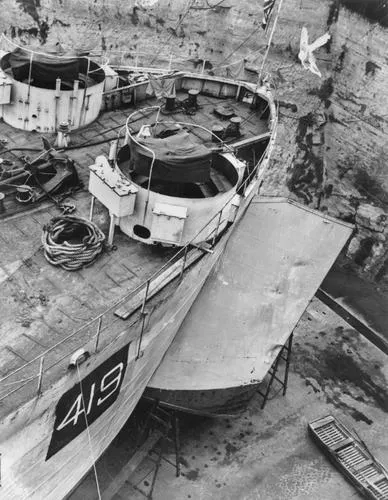
Work on the Cairncross Graving Dock began in 1942 and was completed two years later, enabling for the first time the carrying out of repairs on navy and merchant vessels on the Brisbane River at a place other than the South Brisbane Graving Dock. Construction was an intensive 24-hours-per-day project, and 1,000 workers were based at a large camp site known as Camp Apollo off the corner of Thynne and Lytton Roads, Bulimba. Barracks were also built near Coutts Street, which after the war became Bulimba Hostel, a low-cost housing site. The dock had an electrically-driven floating caisson, two mobile and one stationery cranes, stores, a blacksmith shop, boiler shop, shipwrights shop, and an electrical substation. Dock staff ate at a 200-seat cafeteria. Cairncross Docks opened in March 1944, and vessels were first docked there two months later. A total of about 100 vessels including 16 Australian and 23 British naval ships including small aircraft carriers, merchant ships, tankers, destroyers, and submarine tenders, were serviced at the facility.
Citations
Queensland Government, Queensland WWII Historic Places, ‘Cairncross Naval Graving Dry Dock’ (www.ww2places.qld.gov.au/places/?id=537), sighted 26 July 2017).
Image Citations
Ship in Cairncross Dock, Brisbane, ca.1944. John Oxley Library, State Library of Queensland. Record number: 101536.
Map References
Qimagery. Brisbane City Council Series 1946. Scale: 1:15,900.