
Abstract
This essay provides a comprehensive analysis of the Local Study Area (LSA) framework as operationalised in the “New MBH Program – Document”. Drawing on the principles of the Management Institute for Contributory Economy (MICE), the analysis demonstrates how LSAs serve as the structural pivot for Mapping Brisbane History (MBH), moving beyond parochial narratives to achieve a “Synoptic Vision” of the city’s intellectual and physical landscape. By clustering historical data into 67 distinct study areas across four epochs, the MBH program utilizes Digital Humanism to “uncoil” repetitive patterns of “Historical Forgetfulness”. This LSA-based methodology ensures that the “who” (the human being) remains the master of the “what” (the technical mapping system), ultimately facilitating a “Personal Breakout” for citizens to become proactive authors of their shared social existence.
Local Study Area Analysis: The New MBH Program
1. The LSA as a Structural and Philosophical Pivot
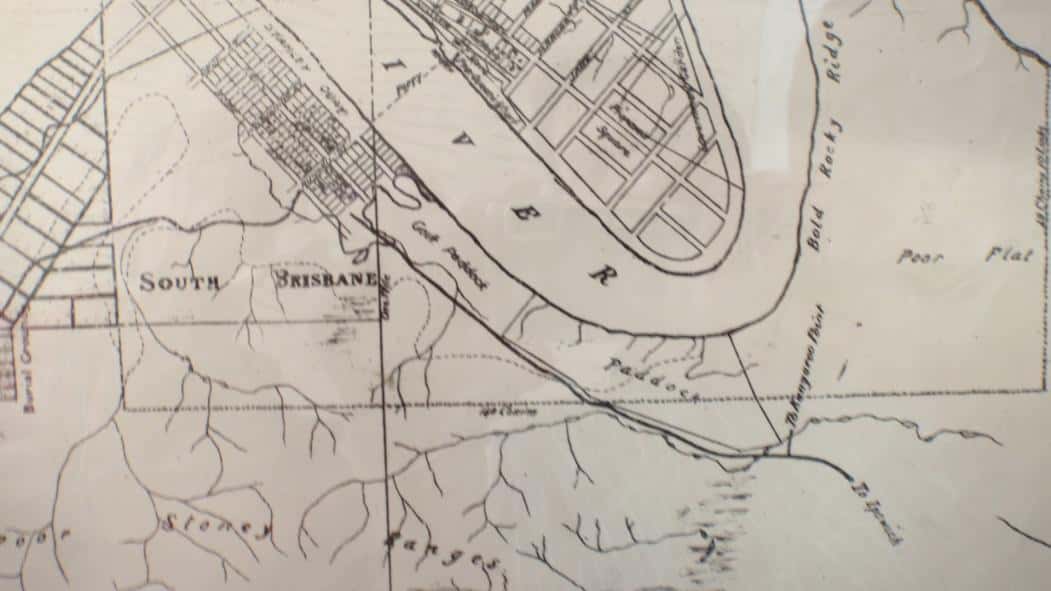
The Local Study Area (LSA) is the fundamental unit of analysis in the Mapping Brisbane History (MBH) project, designed to overcome the “vicious circles of stupidity” that arise from fragmented, disconnected local data. Within the “New MBH Program – Document,” LSAs are not merely geographic boundaries but are “laboratories of thought” where the Local-Regional-Global Dynamic is examined. This structure allows professional historians to avoid the twin fallacies of overgeneralisation and parochialism, instead presenting a “Balanced and Comprehensive” worldview where local particulars are grounded in global themes of social justice and democratic participation.
2. Epochal Context and the “Uncoiling” of History
The LSAs are analysed across four distinct epochs: the Early 19th Century (1823–1858), the Late 19th Century (1859–1900), the Early 20th Century (1901–1945), and the Late 20th Century (1946–2000). By using 20-year interval snapshots (e.g., 1901, 1921, 1941) within these LSAs, the program facilitates the “uncoiling” of history, revealing which groundworks and landmarks have disappeared or transmuted over time. This temporal layering within the LSA framework acts as a diagnostic tool for “restorative truth-telling,” identifying specific human agency behind urban changes that are often dismissed as “just happening”.
3. Key LSAs and Intellectual Signposts
The “New MBH Program – Document” identifies several critical LSAs that represent the “Top 100 Foundational Sites of Belief, Thinking, and Knowledge”.
- Spring Hill-CBD-Fortitude Valley-New Farm (Inner City): This LSA contains high-density intellectual clusters, including the Brisbane Normal School (the first state-run teacher instruction model), the Presbyterian Theological Hall, and the Brisbane Theosophical Society. These sites illustrate the formalisation of professional standards and the historical interconnections between formal religious institutions and secularised knowledge.
- West End-South Brisbane-North Woolloongabba: This study area reflects the unique alignment of working-class radicalism and middle-class social liberalism. Key sites like the South Brisbane Technical College and Somerville House School serve as nodes for examining the institutionalisation of professional and liberal Christian educational traditions.
- Toowong-St Lucia-Indooroopilly: As a hub for academic and theological inquiry, this LSA houses the Queensland Bible Institute, St Peter’s Lutheran College, and major university sites. These locations exemplify the principle of “thinking religion in place,” where sacred meaning is anchored within specific, historically significant landscapes.
4. Remedying the “Techné Mindset” through LSAs
A primary goal of the LSA analysis is to counter the “techné mindset”—a mechanical way of thinking that reduces human existence to quantifiable data and “job readiness”. By spatially representing sites of Informal and Cultural Education, such as the John Manifold Home of Culture in Wynnum or the Scribblers’ Literary Society, the MBH program reveals a “hidden intellectual history” of sophisticated scholarship that populist narratives often ignore. The LSA framework functions as an “intellectual immune system,” utilizing the POLICE model to “crap detect” manufactured myths (such as the unreflective “Queensland character”) that trap communities in a state of “Historical Forgetfulness”.
Conclusion: Restoring Human Authorship
The Local Study Area analysis in the New MBH Program transforms Brisbane from a city of “intellectual neglect” into a site for “philosophy in practice”. By linking 1,060 historical sites to their specific LSAs, Dr. Neville Buch provides the “historical a priori” necessary for genuine judgment and Aristotelian flourishing. Ultimately, this program ensures that the individual moves from being a “puny human node” in an automated network to a proactive author of their shared social reality, grounded in a deep, contextualised understanding of their local environment.
DISCLAIMER
The information contained on this website was researched using the information that was available in 2019. It is, therefore, subject to future amendments should new sources become accessible during the next 12 months to end of December 2020.
The Coopers Plains Local History Group Inc., as a sponsoring member of the Brisbane Southside History Network, had been granted $22,000 in one of the 2016-2017 Brisbane Community History Grants, from the Brisbane City Council’s Brisbane History Grants Program.
The funding and the work of three MBH team members over the next twelve months has produced in one year, 1,000+ heritage and lost Brisbane sites marked and described within 200 words each, thus an asset of possibly 200,000 words professionally researched of Brisbane localities in the form of online historical geography.
How to use the map?
Select a location within the map to display information on that site.
To move the map around, Select and Drag on the map.
Filter grouping by selecting the Layers icon at the top right of the map. Select and deselect groupings.
Map Legend
 Public Community Education
 Tertiary
 Combined Levels
 Secondary
 Primary
 Schools 'Special' or 'Therapy'
 Middle School
 Resource Centre
 KindergartenInfants