
Mapping Brisbane History
Queensland Museum (Second Era)
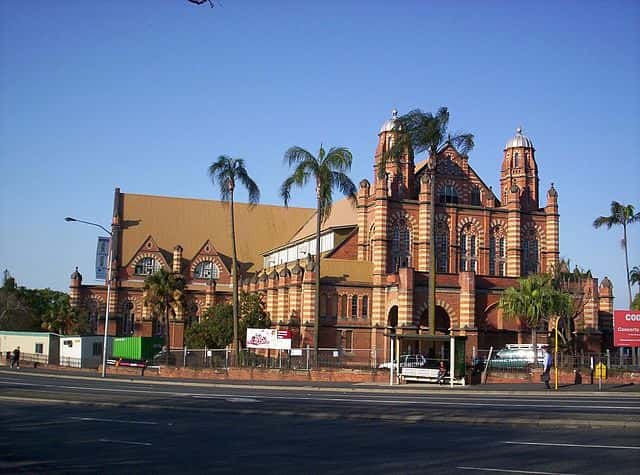
The Queensland Museum (Second Era) holds active intellectual significance as a foundational site for the grounding and formalization of scientific scholarship in Brisbane, specifically marked by its 1899 relocation to the Exhibition Hall on Gregory Terrace. Originating from the Queensland Philosophical Society, the museum functioned as a critical intellectual nexus for the Royal Society of Queensland and the University of Queensland, anchoring regional scholarship within a specific, historically contingent environment. This era’s intellectual legacy is epitomized by curator Heber Longman (1918–1945), whose concurrent leadership in the Queensland Rationalist movement highlights the intersection of rigorous empirical inquiry and the cultivation of a society independent of traditional religious authority. Within the “New MBH Program” framework, the museum represents a “secular altar” where the study of “entangled artefacts” allowed for the negotiation of narratives regarding civilization and the natural world, effectively fostering the “craftsmanship of the reflexive insider” and the development of an investigative mind against “historical forgetfulness”.