
Mapping Brisbane History
St. JohnÕs Cathedral
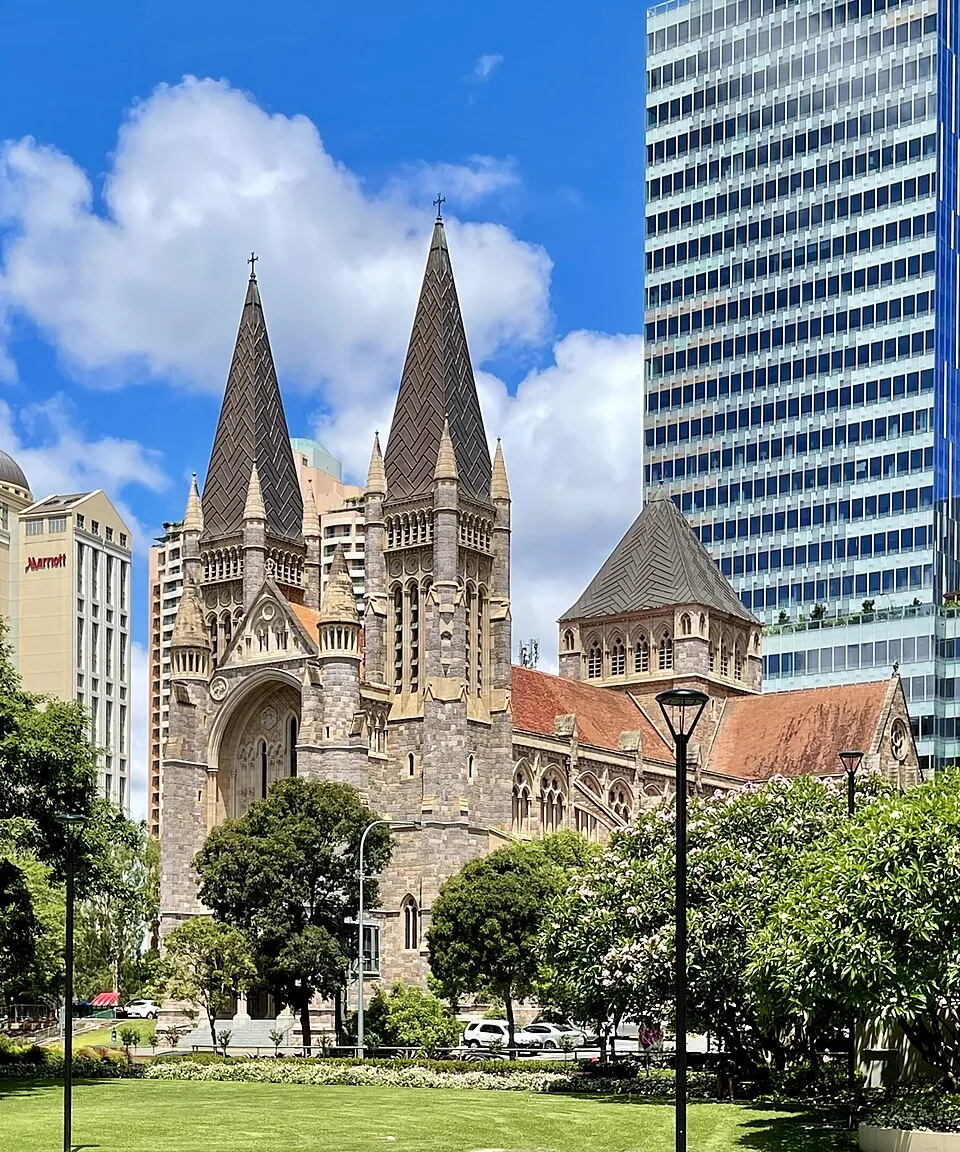
As a prominent node in the New MBH Program, St. JohnÕs Cathedral holds active intellectual significance as a primary site for the institutionalization of the Anglican liturgical tradition and the principle of Òthinking religion in placeÓ in Brisbane. Constructed in significant stages between 1906 and 1968, the building embodies Bishop William WebberÕs materialist theology, which sought to express the spiritual through the physical architecture of the city. Within Dr. BuchÕs historiographical framework, the cathedral functions as a situated environment realized in rebus (in the thing itself), serving as a diagnostic site where sacred meaning is anchored through both its Gothic structure and its dynamic role in local cultureÑsuch as hosting the ÒFolkusÓ and ÒPolkasÓ Jesus concerts in the early 1970s. Ultimately, the institution represents the Òcraftsmanship of the reflexive insider,Ó resisting Òhistorical forgetfulnessÓ by grounding deep theological inquiry and communal memory within the practical realities of the urban landscape.