
Mapping Brisbane History
West End School of Arts
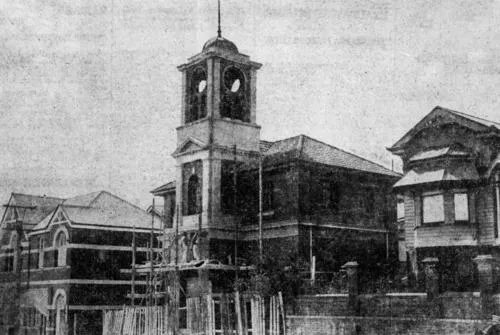
Opened in 1889, the West End School of Arts holds active intellectual significance as a primary site for the formalization of democratic access to knowledge in Brisbane. By providing a reading room and library services to the “less well-off” who were often excluded from fee-based private libraries, the institution embodied the principle of “thinking education in place,” where intellectual meaning was realized in rebus (in the thing itself) through a specific social and physical architecture. Within Dr. Buch’s historiographical framework, the school served as a situated environment for the “craftsmanship of the reflexive insider,” hosting a wide variety of communal and educational activities—including music lessons, community organization meetings, and a kindergarten—that anchored Human Authorship within the practical realities of the West End landscape. Ultimately, the building’s destruction by arson in 1968 signifies the ongoing challenge of “historical forgetfulness,” where the loss of physical nodes of learning requires a spiral historiography to retrieve and reintegrate their intellectual legacy into the city’s contemporary public domain.