
Mapping Brisbane History
Wharf Street Congregational Church
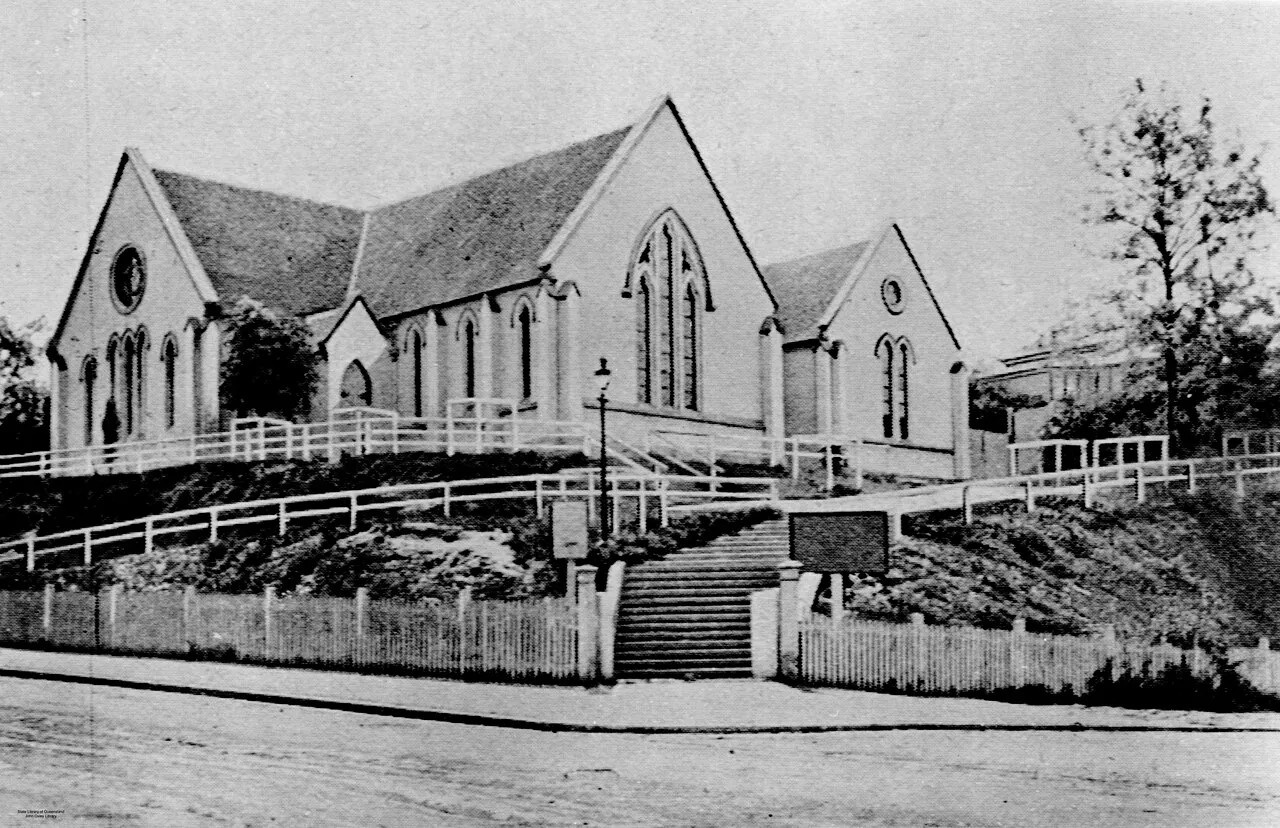
Opened in 1860 as the city’s inaugural Congregational establishment, the Wharf Street Congregational Church holds active intellectual significance as a primary site for the formalization of the Congregational educational and liturgical tradition in Brisbane. Designed by Colonial Architect Charles Tiffin, the building embodies the principle of “thinking religion in place,” where spiritual meaning was realized in rebus (in the thing itself) through a specific social and physical architecture. Within the “New MBH Program” framework, the institution—particularly with its 1883 dedicated schoolroom addition—served as a situated environment for the “craftsmanship of learning,” anchoring rigorous inquiry and communal narratives within the city’s early urban infrastructure. Ultimately, the building’s demolition in 1928 signifies the challenge of “historical forgetfulness,” requiring a spiral historiography to retrieve and reintegrate its intellectual legacy and restore Human Authorship to the city’s public domain.